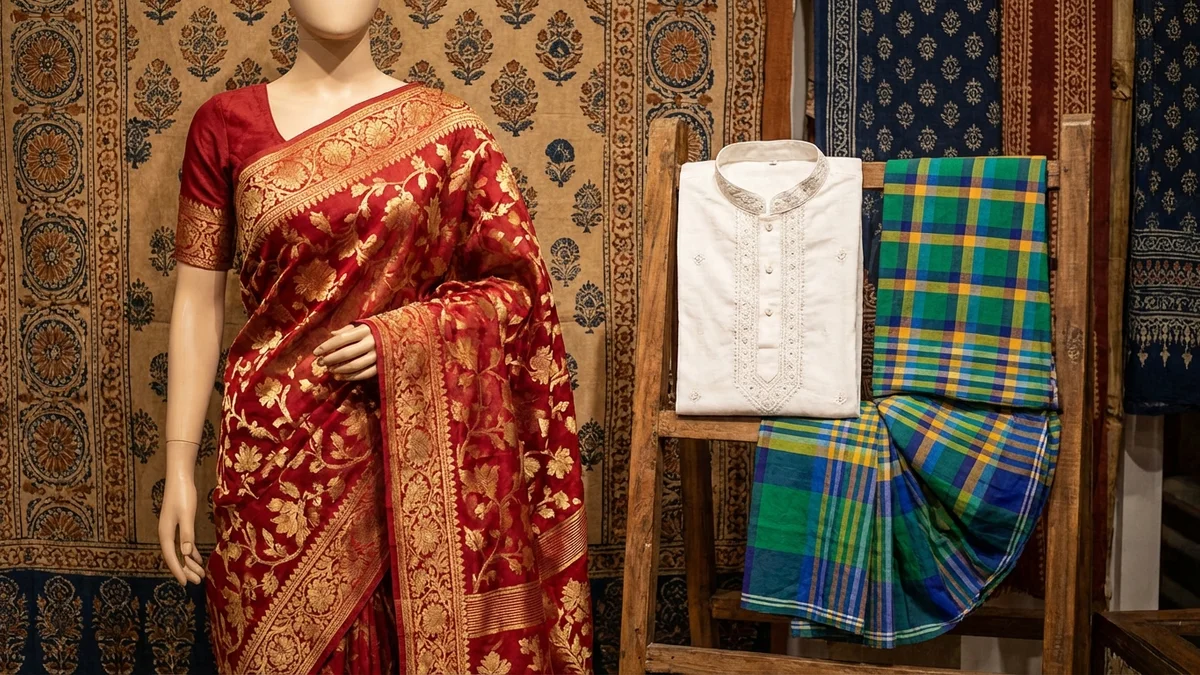
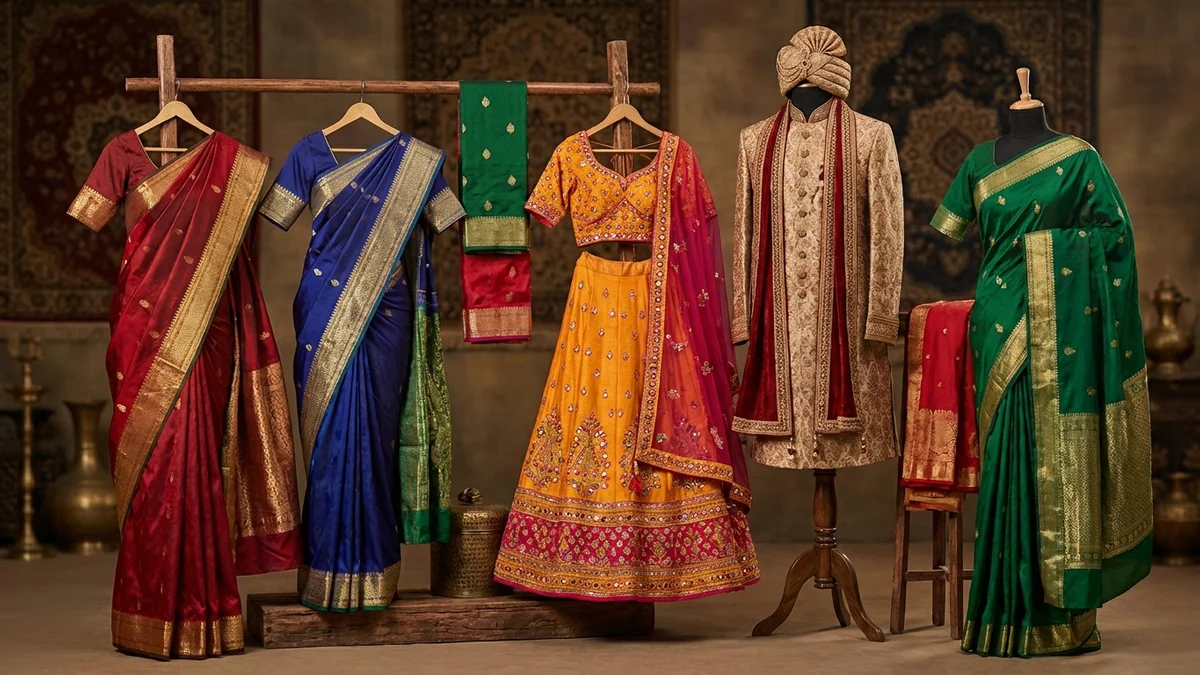
India's traditional clothing represents one of the world's oldest and most diverse fashion traditions. With 29 states and over 1.4 billion people, the country produces an extraordinary range of garments, each with its own name, history, and cultural meaning. Like Japanese traditional attire or Korean hanbok fashion, Indian clothing carries deep cultural significance while evolving with modern trends. Whether you call it a saree, lehenga, sherwani, or kurta, every piece tells a story rooted in centuries of craftsmanship.
This guide covers every major type of Indian traditional clothing. You'll learn the proper names, regional variations, styling tips, and how modern technology makes it easier than ever to explore these beautiful garments.
TL;DR
Indian traditional clothing includes sarees, lehengas, salwar kameez, and anarkalis for women, plus sherwanis, dhotis, and kurta-pajamas for men. Each garment carries deep cultural significance and varies by region, occasion, and fabric. India's ethnic wear market exceeds $116 billion in 2026, with virtual try-on technology now letting you visualize these outfits before buying.
What Are Indian Clothing Called?
Indian traditional clothing goes by many names depending on the garment type, gender, and region. The most recognized garment is the saree (also spelled sari), a long piece of unstitched fabric draped elegantly around the body. For men, the dhoti serves as the equivalent traditional staple. Beyond these, India has dozens of named garments, each tied to specific cultures, occasions, and regions.
Here is a quick overview of the main Indian clothing names:
| Garment | Gender | Region | Occasion |
|---|---|---|---|
| Saree (Sari) | Women | All India | Daily to formal |
| Lehenga Choli | Women | North/West India | Weddings, festivals |
| Salwar Kameez | Women | Punjab, Kashmir | Daily to semi-formal |
| Anarkali Suit | Women | North India | Celebrations |
| Gharara/Sharara | Women | Lucknow, Hyderabad | Weddings |
| Sherwani | Men | North India | Weddings, formal |
| Dhoti | Men | All India | Traditional ceremonies |
| Kurta-Pajama | Men | All India | Daily to semi-formal |
| Bandhgala (Nehru Jacket) | Men | All India | Formal events |
| Lungi | Men | South/East India | Daily wear |
Key Takeaway: India has over 30 distinct traditional garment types. The saree and dhoti are the most universally recognized, but each state has its own signature clothing.
What Are the Types of Traditional Indian Dresses for Women?
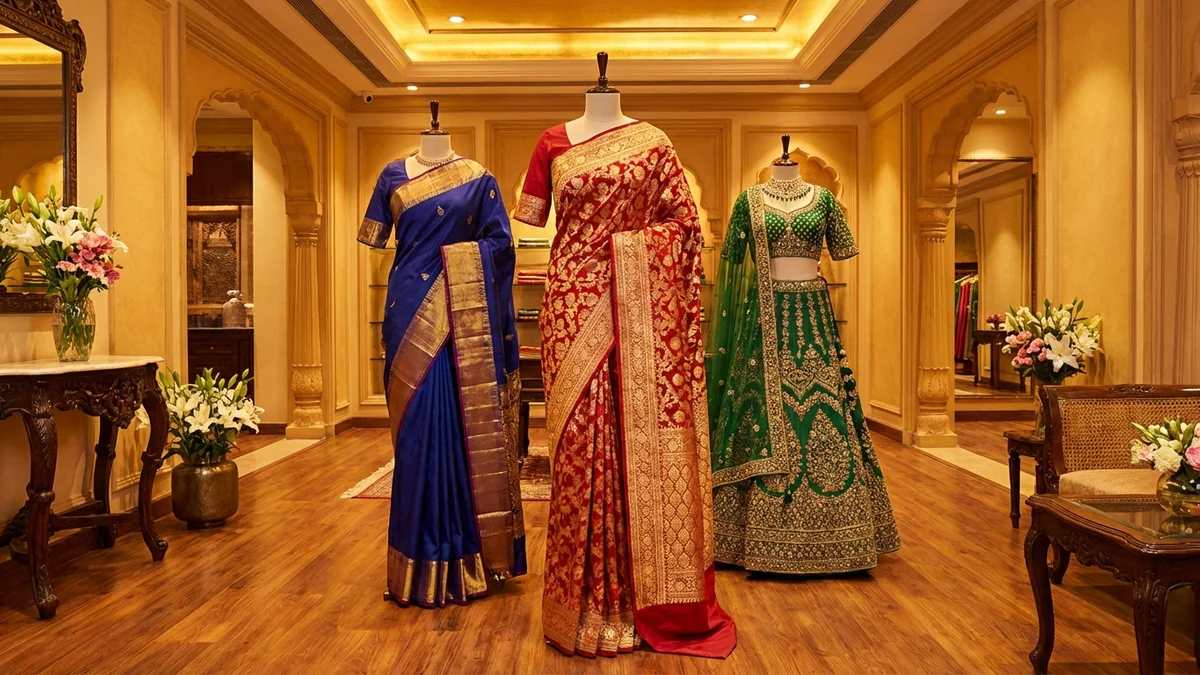
Traditional Indian dresses for women range from the universally worn saree to region-specific garments like the ghagra choli of Rajasthan and the mekhela chador of Assam. Each dress features unique draping techniques, fabrics, and embellishments that reflect local culture and climate.
The Saree: India's Most Iconic Garment
The saree dates back to approximately 2800 BC during the Indus Valley civilization. It consists of a single piece of unstitched fabric, typically 5 to 9 yards long, draped around the body in various styles. The saree is paired with a fitted blouse called a choli and a petticoat underneath.
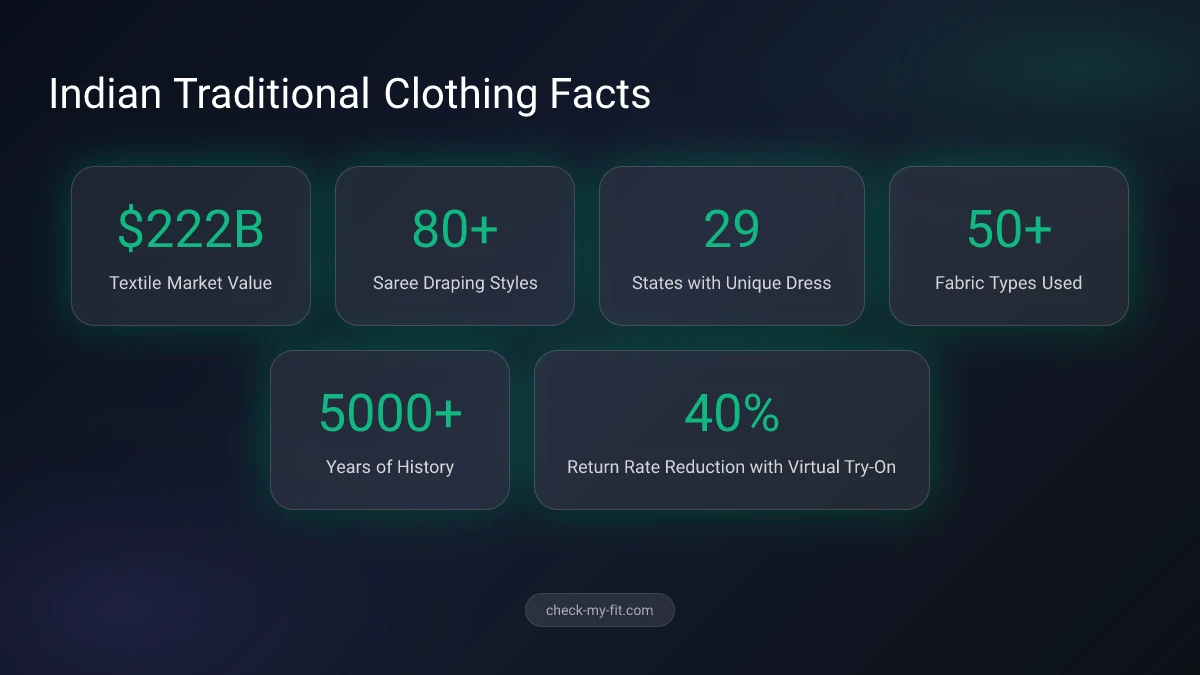
India has over 80 documented saree draping styles, each unique to a specific region or community.
Popular Saree Types by Region:
| Saree Type | Origin State | Fabric | Known For |
|---|---|---|---|
| Banarasi | Uttar Pradesh | Silk | Gold zari work |
| Kanjeevaram | Tamil Nadu | Silk | Temple borders |
| Chanderi | Madhya Pradesh | Cotton-silk | Sheer texture |
| Bandhani | Gujarat/Rajasthan | Cotton/Silk | Tie-dye patterns |
| Paithani | Maharashtra | Silk | Peacock motifs |
| Kasavu | Kerala | Cotton | White with gold border |
| Baluchari | West Bengal | Silk | Mythological scenes |
| Muga | Assam | Muga silk | Golden sheen |
| Pochampally | Telangana | Silk/Cotton | Ikat weaving |
| Patola | Gujarat | Silk | Double ikat |
Lehenga Choli
The lehenga choli is a three-piece ensemble consisting of a lehenga (long flared skirt), a choli (fitted blouse), and a dupatta (scarf). This outfit dominates Indian wedding fashion. Bridal lehengas feature heavy embroidery with zari, sequins, and stonework.
Modern designers have expanded the lehenga into numerous sub-styles. A-line lehengas suit most body types. Mermaid lehengas hug the body before flaring at the knee. Circular lehengas provide maximum volume for grand occasions.
Salwar Kameez
The salwar kameez originated in Punjab and Kashmir but has become one of India's most worn outfits. It consists of:
- Kameez: A knee-length tunic
- Salwar: Loose-fitting trousers gathered at the ankle
- Dupatta: A matching scarf draped over the shoulder
Variations include the Patiala suit (with extra-voluminous pleated salwar), the Anarkali suit (with a long, flowing kameez), and the churidar (with tightly fitting trousers).
Other Traditional Women's Garments
- Ghagra Choli: Traditional dress of Rajasthan and Gujarat featuring mirror work and vibrant embroidery
- Mekhela Chador: Two-piece draped garment from Assam with intricate Assamese weaving
- Langa Voni: Half-saree style worn by young girls in South India
- Pheran: Long loose gown from Kashmir, ideal for cold weather
What Do Indian Men Wear Traditionally?
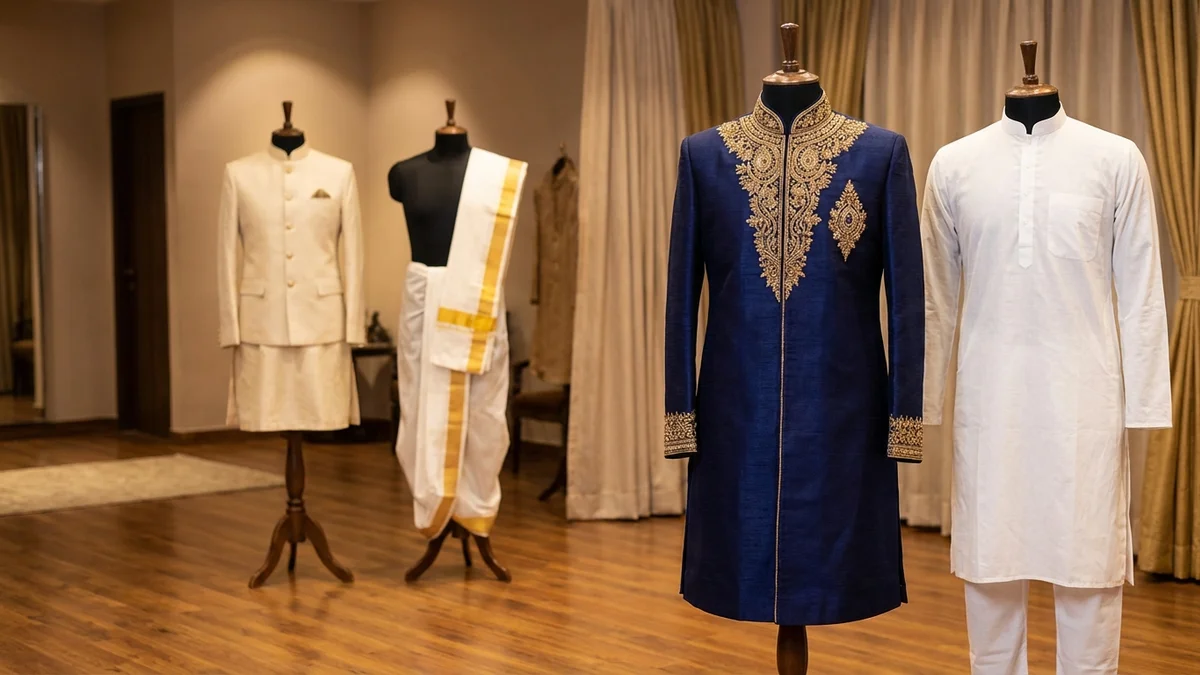
Indian men's traditional clothing centers around the kurta-pajama for daily wear and the sherwani for formal occasions. The dhoti remains the most traditional male garment, worn during religious ceremonies and cultural events across the country. Men's ethnic wear has seen a major revival in recent years, blending heritage cuts with contemporary styling.
Sherwani
The sherwani is a knee-length coat with a fitted silhouette. It originated during the Mughal era and remains the top choice for Indian grooms. Key features include:
- Mandarin or band collar
- Center-front button closure
- Heavy embroidery (zardozi, sequins, thread work)
- Paired with churidar pants or dhoti
Dhoti
The dhoti is an unstitched cloth (typically 4.5 meters long) wrapped around the waist and legs. It holds deep cultural and religious significance. South Indian men wear it in a different style than North Indians. Politicians and priests frequently wear dhotis as a symbol of Indian identity.
Kurta-Pajama
The kurta-pajama is India's most versatile men's outfit. The kurta (a knee-length tunic) pairs with loose pajama pants. It works for casual daily wear, office settings, and even semi-formal events depending on the fabric and embellishment.
Bandhgala (Nehru Jacket)
The Bandhgala is a fitted, high-collared jacket that became internationally famous as the "Nehru Jacket." Originally from Jodhpur, Rajasthan, it represents Indian formal elegance. Today it works as standalone formal wear or layered over a kurta.
| Men's Garment | Formality Level | Best Occasions | Price Range |
|---|---|---|---|
| Sherwani | Very formal | Weddings, receptions | $150–$2000+ |
| Bandhgala | Formal | Corporate events, parties | $80–$500 |
| Kurta-Pajama | Casual to semi-formal | Daily wear, festivals | $30–$200 |
| Dhoti | Traditional/Formal | Ceremonies, temples | $15–$100 |
| Lungi | Casual | Home, daily wear | $10–$30 |
Key Takeaway: Indian men's fashion ranges from ultra-casual lungis to heavily embroidered sherwanis worth thousands of dollars. The occasion and region determine the right choice.
Indian Traditional Clothing by Region and State
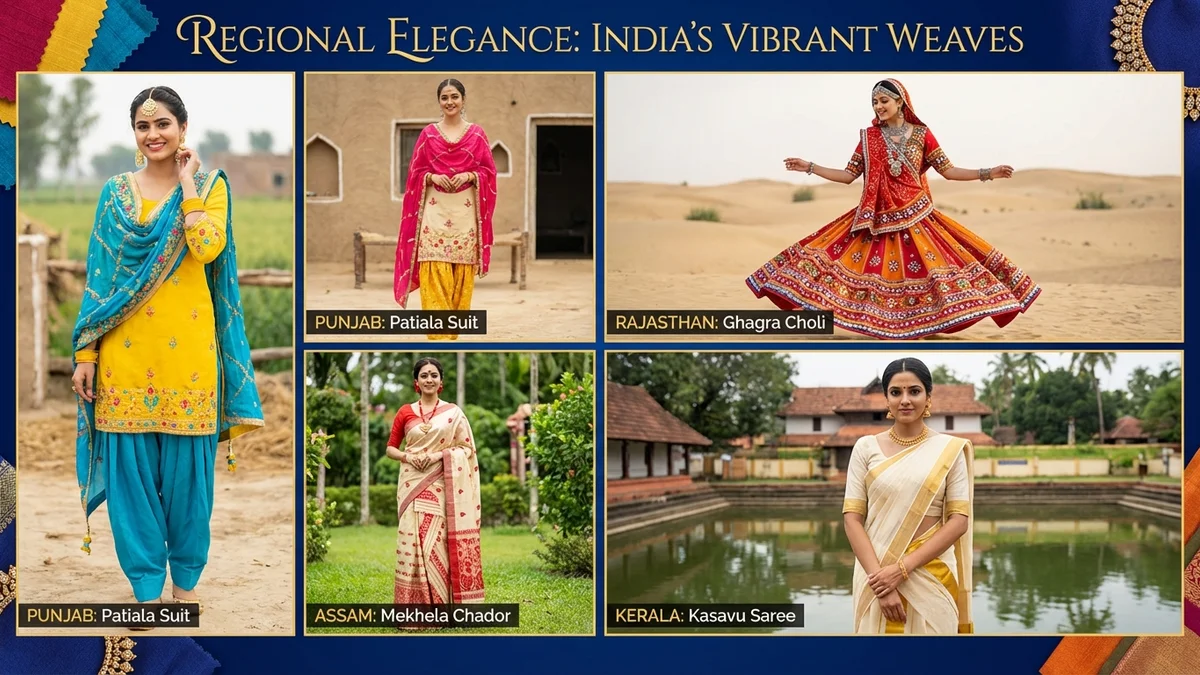
India's 29 states each have distinctive clothing traditions shaped by climate, culture, and local craftsmanship. Understanding regional variations helps you appreciate the depth of Indian fashion heritage.
North India
Punjab is home to the Patiala suit and the iconic phulkari (flower work) embroidery on dupattas. Bright colors dominate Punjabi fashion. Men wear turbans (pagri) as cultural headgear.
Rajasthan features the ghagra choli with elaborate mirror work and tie-dye (bandhani) techniques. The Rajasthani turban (safa) indicates social status and region through its color and tying style.
Uttar Pradesh produces the world-famous Banarasi silk sarees and Lucknow's delicate chikankari embroidery.
South India
Tamil Nadu is known for Kanjeevaram silk sarees with temple-inspired borders. Men wear the veshti (white dhoti) with a matching angavastram (cloth draped over the shoulder).
Kerala features the elegant Kasavu saree, a white or cream cotton fabric with a distinctive gold border. The mundu serves as daily wear for both men and women.
Karnataka produces Mysore silk sarees and the distinctive Ilkal saree with its kasuti embroidery.
East and Northeast India
West Bengal is celebrated for its Baluchari and Tant sarees. Bengali women traditionally drape their sarees in a unique front-pleating style distinct from the Nivi drape.
Assam produces the Mekhela Chador and the golden Muga silk, one of the rarest fabrics globally. Only Assam produces this naturally golden-hued silk.
West India
Gujarat contributes the Patola saree (double ikat weaving), Bandhani textiles, and chaniya choli. The Kutch region is famous for its intricate mirror work embroidery.
Maharashtra is known for the Nauvari saree (nine-yard saree draped like a dhoti) and Paithani silk sarees with their peacock and lotus motifs.
Fabrics and Textiles Used in Indian Clothing
Indian textiles form the backbone of the country's fashion tradition. The fabric choice determines the garment's occasion, drape, comfort, and price point.
India's textile and apparel market was valued at USD 222 billion in 2024 and is projected to reach USD 647 billion by 2033, growing at 12% annually.
Major Indian Fabrics:
- Silk (Banarasi, Kanjeevaram, Mysore, Muga, Tussar): The premium choice for weddings and formal events
- Cotton (Chanderi, Kota, Khadi): Breathable and comfortable for daily and semi-formal wear
- Chiffon and Georgette: Lightweight options for modern draping styles
- Velvet: Heavy fabric used for winter sherwanis and lehengas
- Brocade: Richly decorated fabric with raised patterns, common in Banarasi weaving
Traditional Embroidery Techniques:
| Embroidery | Origin | Technique | Used On |
|---|---|---|---|
| Zardozi | Lucknow | Gold/silver thread | Sherwanis, lehengas |
| Chikankari | Lucknow | White thread on fabric | Kurtas, sarees |
| Phulkari | Punjab | Silk thread on cotton | Dupattas, shawls |
| Kantha | West Bengal | Running stitch | Sarees, quilts |
| Mirror Work | Gujarat/Rajasthan | Small mirrors stitched in | Ghagra choli, bags |
| Kasuti | Karnataka | Cross-stitch patterns | Sarees, blouses |
| Aari | Kashmir | Hook-based embroidery | Shawls, suits |
How to Choose Indian Traditional Clothing
Selecting the right Indian outfit depends on four key factors: the occasion, your body type, the climate, and your personal style. Here are practical guidelines for making the right choice.
By Occasion:
- Weddings: Lehenga choli (women) or sherwani (men) in rich fabrics with heavy embellishment
- Festivals: Bright-colored sarees, anarkalis, or kurta-pajamas
- Daily wear: Cotton salwar kameez or simple kurta-pajama
- Office: Understated kurta with minimal embroidery or a Bandhgala jacket
- Religious events: White or pastel dhoti-kurta (men) or simple cotton saree (women)
By Body Type:
- Petite frames: A-line silhouettes, lighter fabrics, vertical patterns
- Tall frames: Heavy lehengas, floor-length anarkalis, draped sarees
- Curvier bodies: Straight-cut kurtas, well-fitted cholis, darker solid colors
- Athletic builds: Structured sherwanis, tapered churidars, tailored blouses
Key Takeaway: There is no single "right" Indian outfit. The best choice balances occasion, comfort, and personal expression.
How to Try Indian Traditional Clothing Virtually
Shopping for Indian traditional clothing online presents a common challenge. Garments like sarees and lehengas look dramatically different depending on body shape, height, and skin tone. This is where AI-powered virtual try-on technology transforms the experience.
CheckMyFit uses advanced AI to let you visualize how Indian traditional clothing looks on your actual body. Upload your photo, select the garment, and see a realistic preview instantly. This eliminates the guesswork of buying ethnic wear online, especially for:
- Saree draping visualization: See how different draping styles suit your frame
- Lehenga fit preview: Check proportions before ordering a custom piece
- Color matching: Test how vibrant reds, golds, and pastels complement your skin tone
- Cross-cultural exploration: If you're new to Indian fashion, try different styles risk-free
Virtual try-on technology reduces online clothing return rates by up to 40%, saving time and money on expensive ethnic wear.
Whether you're attending an Indian wedding, exploring cultural fashion, or simply curious about how a Kanjeevaram saree looks on you, virtual try-on tools make it possible without visiting a store.

Recommended Products for Indian Fashion

Essential for getting accurate measurements before ordering Indian clothing online. Sarees, lehengas, and sherwanis all require precise body measurements for the perfect fit.
View on Amazon →
Keep silk sarees and embroidered lehengas wrinkle-free without risking damage from irons. A garment steamer is the safest way to maintain delicate Indian fabrics.
View on Amazon →
A full-length mirror is essential for perfecting saree drapes and lehenga styling. This arched mirror provides a complete head-to-toe view for Indian outfit coordination.
View on Amazon →Indian Fashion in the Modern Era
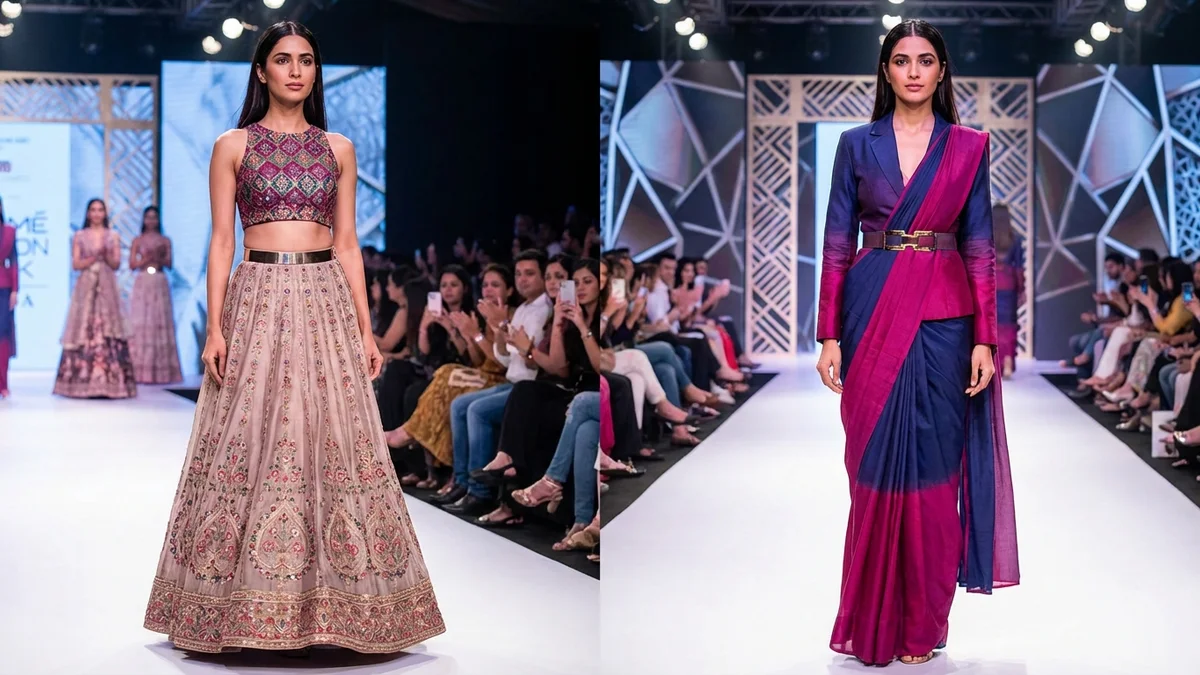
Indian traditional clothing has evolved significantly in recent decades. Designers like Sabyasachi Mukherjee, Manish Malhotra, and Anita Dongre have brought Indian ethnic wear to global runways. The fusion of traditional techniques with contemporary silhouettes has created entirely new categories.
Modern Trends in Indian Fashion (2026):
- Indo-Western fusion: Crop tops paired with lehenga skirts, sarees draped with belts, kurtas worn with jeans
- Sustainable fashion: Revival of handloom fabrics, khadi, and natural dyes
- Celebrity influence: Bollywood and social media driving demand for designer ethnic wear
- Digital shopping: AI virtual try-on and e-commerce platforms like Myntra and Ajio expanding access
- Gender-fluid designs: Sherwanis and Bandhgalas adapted for women, flowing kurtas for all genders
The global Indian ethnic wear market continues to grow as cultural appreciation expands worldwide. Indian weddings, Diwali celebrations, and Holi festivals have introduced these garments to audiences far beyond South Asia. Similar cultural fashion revivals are happening with Thai traditional clothing, Indonesian batik and kebaya, and Malaysian traditional dress.
Frequently Asked Questions
What is the national dress of India?
India does not have an officially designated national dress. However, the saree for women and the dhoti-kurta for men are widely considered the most representative traditional garments. The saree is worn across all states, though each region has its own fabric, draping style, and embellishment tradition. The khadi fabric, popularized by Mahatma Gandhi, holds special national significance.
What do Indian men wear traditionally?
Indian men traditionally wear kurta-pajama for daily occasions, sherwani or Bandhgala for formal events, and dhoti for religious ceremonies. Regional variations include the lungi in South India, the pagri (turban) in Rajasthan and Punjab, and the pheran in Kashmir. Modern Indian men often blend traditional kurtas with Western elements for a contemporary look.
What fabrics are used in Indian traditional clothing?
Indian clothing uses a wide range of fabrics including silk (Banarasi, Kanjeevaram, Mysore, Muga), cotton (Chanderi, Kota, Khadi), chiffon, georgette, velvet, and brocade. Silk dominates wedding and formal wear due to its luxurious drape and luster. Cotton is preferred for daily wear, especially in India's hot climate. Each region specializes in particular weaving techniques.
What is the difference between a saree and a lehenga?
A saree is a single unstitched piece of fabric (5-9 yards) draped around the body, while a lehenga is a stitched, flared skirt worn with a fitted blouse (choli) and scarf (dupatta). Sarees are more versatile and worn for both casual and formal occasions. Lehengas are typically reserved for weddings and celebrations. Sarees require draping skill, while lehengas are easier to wear for beginners.
When should you wear traditional Indian clothing?
Traditional Indian clothing is appropriate for weddings, religious ceremonies, cultural festivals (Diwali, Holi, Eid, Pongal), formal events, and daily wear. The level of embellishment should match the occasion. Heavy embroidery suits weddings. Simple cotton works for daily wear. There are no strict rules for non-Indians wearing Indian clothing, though respectful appreciation of the cultural context is valued.
How has Indian fashion evolved in modern times?
Indian fashion has embraced Indo-Western fusion, combining traditional silhouettes with modern cuts. Designers now create crop-top lehengas, belted sarees, and structured Bandhgalas for women. Sustainable fashion has revived handloom and khadi. E-commerce and AI virtual try-on platforms have made ethnic wear accessible globally. Bollywood and social media continue to drive new trends in Indian traditional clothing.
How do you drape a saree?
The most common saree draping style is the Nivi drape from Andhra Pradesh. Start by tucking one end into the petticoat at the waist. Wrap the fabric around the body once. Create pleats at the front and tuck them in. Drape the remaining fabric (pallu) over the left shoulder. India has over 80 regional draping styles, each producing a different silhouette and aesthetic.
Can non-Indians wear Indian traditional clothing?
Yes. Indian culture generally welcomes people from all backgrounds wearing traditional Indian clothing. It is considered a form of cultural appreciation. Attending Indian weddings, festivals, or cultural events in appropriate ethnic wear is usually seen as respectful. Focus on wearing the garments properly and understanding their cultural significance rather than treating them as costumes.
Conclusion
Indian traditional clothing is one of the world's richest fashion traditions. From the timeless elegance of the saree to the regal grandeur of the sherwani, these garments carry centuries of cultural heritage, regional identity, and artistic craftsmanship. Understanding what Indian clothing is called and how each piece fits into the broader tapestry of Indian culture gives you a deeper appreciation for this extraordinary tradition.
Whether you're preparing for an Indian wedding, exploring ethnic fashion, or building a culturally diverse wardrobe, the right Indian outfit exists for every occasion and body type. Start your exploration today by trying on Indian traditional clothing virtually with CheckMyFit and discover which styles suit you best.